
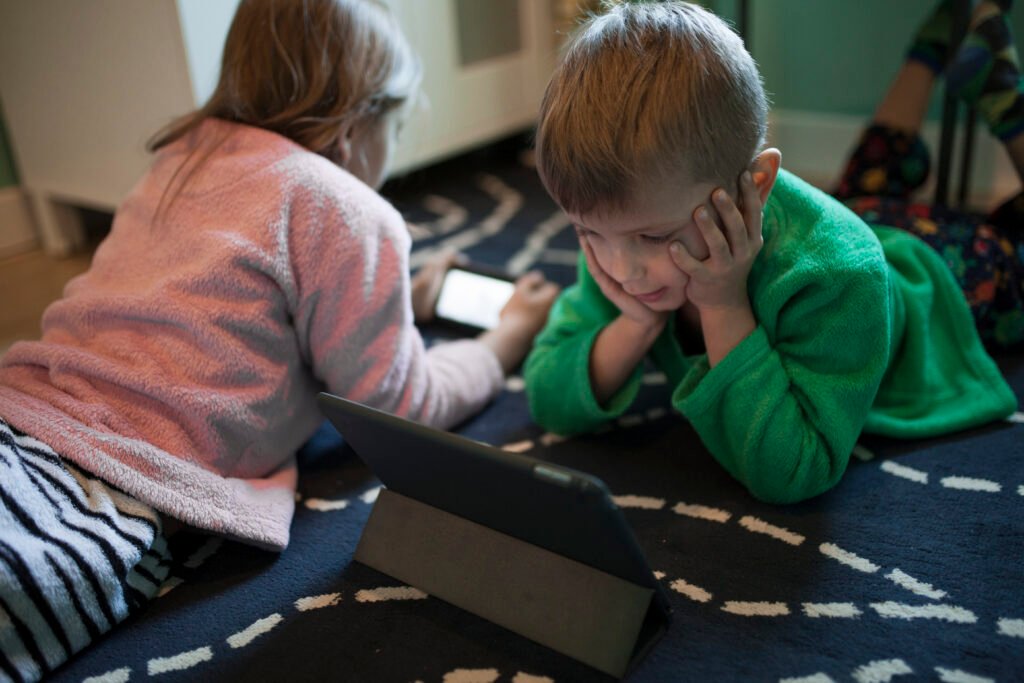
Picture this: a two-year-old sits perfectly still, eyes locked on a tablet, completely unreachable by the parent calling their name across the room. Or a ten-year-old who cannot concentrate on a single homework question without checking their phone every three minutes. These are not unusual scenes in modern homes — and they point to a question that millions of parents are quietly asking: what is all this screen time actually doing to my child’s brain?
It is a question worth taking seriously, because the answer is neither simple nor alarming — it is nuanced. The developing brain is extraordinarily responsive to experience, and screens are now one of the most powerful and pervasive experiences in a child’s life. Understanding how they interact with brain development gives parents the information they need to make genuinely thoughtful choices — not out of panic, but out of knowledge.
The Developing Brain: A Window of Extraordinary Opportunity
The first five years of life represent the most intense period of brain development a human being will ever experience. Billions of neural connections are being formed, strengthened, and pruned based on what a child sees, hears, touches, and explores. The brain at this stage is not just absorbing information — it is building its own architecture, and the quality of experiences during this window shapes that architecture in lasting ways.
This is why parents and educators at the Best boarding school in Bangalore invest so deliberately in the quality of early childhood experiences — because what happens in these years does not just influence the child’s immediate learning. It shapes the very structure of how they will think, feel, and connect with the world for the rest of their lives.
Language: The First Casualty of Too Much Screen Time
Language development is one of the clearest areas where screen time shows measurable impact. Children learn to speak not by listening to voices from a screen but through what scientists call “serve and return” interactions — the millions of tiny conversational exchanges between a child and a responsive adult where the child makes a sound, a gesture, or a word, and the adult responds with warmth and engagement.
These interactions are irreplaceable, and screens interrupt them in two ways: they reduce the time children spend in real conversation, and they absorb parental attention that would otherwise go towards engaging with the child. Studies consistently find that children in high screen-time households enter school with smaller vocabularies and slower language development than those whose caregivers talk, read, and play with them regularly.
This is not about perfect parenting. It is about protecting enough time and attention for the conversations that build the brain. The Best school in Electronic City that takes early childhood seriously will always prioritise environments rich in language, song, storytelling, and human interaction — because educators know what screens cannot provide.
Attention: When the Brain Gets Rewired for Speed
Here is something most parents do not realise: the apps, videos, and games children spend hours with are not neutral entertainment. They are engineered by some of the world’s most sophisticated technology companies to be as stimulating as possible — delivering rapid-fire rewards, flashing visuals, and constant novelty designed to hold attention through sheer intensity.
For a young brain that is still building its attentional architecture, this creates a genuine problem. The brain begins to calibrate itself to expect that level of stimulation. When it is absent — during a maths lesson, while reading a book, or simply sitting at the dinner table — the child experiences something that feels unbearably boring by comparison. This is not a behaviour problem. It is a brain that has been trained to need more.
Multiple studies have found associations between high screen exposure in early childhood and increased attention difficulties in the school years. The Top school in Bannerghatta road addresses this directly — prioritising varied, engaging, hands-on learning methods that hold attention through genuine interest and challenge rather than overstimulation.
Sleep: The Hidden Victim
Of all the ways screens affect children, sleep disruption may be the most consequential — and the most underestimated. The blue light emitted by screens actively suppresses melatonin, the hormone that signals to the brain that it is time to sleep. But beyond the light, the content itself is typically stimulating, emotionally engaging, and designed to make stopping feel difficult. The result is children lying awake long after their devices are put away, brains still buzzing.
The consequences of disrupted sleep in children are far-reaching. Sleep is when the brain consolidates the day’s learning, clears metabolic waste, and replenishes the cognitive and emotional resources needed for the next day. Chronically sleep-deprived children are more emotionally dysregulated, less able to concentrate, more impulsive, and more vulnerable to anxiety and low mood. The Top international school in Bannerghatta Road and its peers consistently report that students who protect their sleep perform measurably better across every dimension of school life — academically, athletically, and socially.
Emotional Development: What Screens Cannot Teach
The capacity to manage emotions — to sit with frustration, wait for something desired, repair a falling-out with a friend, and read the feelings of another person — is not learned from a screen. It is learned through the messy, imperfect, irreplaceable experience of human interaction. Through play that goes wrong. Through negotiations with siblings. Through the experience of being upset and being comforted by someone who actually loves you.
Excessive screen time crowds out these experiences. It also exposes children to content that often models emotional extremes — explosive reactions, instant gratification, and social dynamics that bear little resemblance to real relationships. Children who spend significantly more time with screens than with people in the early years may arrive at school less practised in the emotional and social skills that friendships and classrooms demand. The Top school in Electronic City recognises this and weaves social-emotional learning throughout its curriculum — because academic success without emotional intelligence is an incomplete education.
Not All Screens Are the Same
It would be unfair and unhelpful to treat all screen use as equally problematic. There is meaningful evidence that high-quality, slow-paced educational content — particularly when a parent watches alongside a child and discusses what they are seeing — can genuinely support vocabulary, curiosity, and conceptual learning. Video calls with grandparents are real, responsive social interaction. A documentary about deep-sea creatures watched with a curious eight-year-old is very different from three hours of algorithmically curated short-form videos.
The question parents should be asking is not just “How much?” but “What kind? When? With whom? And at what cost to other experiences?” A screen that displaces outdoor play, reading, conversation, or sleep is a screen doing more harm than good. A screen used briefly and intentionally as one tool among many is a very different proposition.
What Parents Can Do: Practical Steps That Actually Work
- Establish consistent screen-free times — during meals, in the hour before bed, and in the first hour after waking — when the family is simply present with each other
- Remove screens from bedrooms entirely: the single most effective step for protecting sleep quality
- Replace screen time with active alternatives — outdoor play, creative making, reading together, cooking — rather than simply imposing restrictions without offering something better
- Watch with your child when screens are used: ask questions, make connections, and discuss what you see together
- Model the behaviour you want to see: children who see their parents absorbed in phones will naturally absorb the same relationship with devices
Conclusion
The goal is not to raise children in a screen-free bubble — that ship has sailed, and it was never realistic. The goal is to raise children who have a healthy, intentional, and well-boundaried relationship with technology: children who can put the device down, who sleep well, who hold a conversation with ease, and who find genuine pleasure and meaning in the offline world.
That outcome is not the result of restriction alone. It is the result of filling children’s lives so richly — with play, books, nature, relationships, and genuine experience — that screens take their rightful place as a small part of a much larger and more interesting life.
FAQs
1. How much screen time is actually safe for young children?
Health organisations recommend no screen time for under-twos except video calls, a maximum of one hour of quality content daily for ages two to five, and consistent, boundaried use for older children. Quality, context, and co-viewing matter as much as total minutes.
2. Can screens cause ADHD?
Screens do not directly cause ADHD, but high early exposure to fast-paced digital content may not support the development of sustained attention. ADHD has complex genetic and neurological roots. If you have concerns about your child’s attention, a professional assessment is the right step.
3. Is educational screen content genuinely beneficial?
port vocabulary and conceptual learning, especially when a parent co-views and discusses it with the child. The key variable is parental involvement — the same content watched alone has significantly reduced benefit.
4. How do I reduce screen time without daily battles?
Set consistent, calm, family-wide limits rather than child-only restrictions. Give advance notice before screen time ends. Fill the freed time with genuinely appealing alternatives. Avoid using screens as rewards or punishments — doing so inflates their perceived value and makes limiting them harder.
5. When can children start managing their own screen use?
Digital self-regulation is a skill that develops gradually through adolescence. Primary school children almost universally need external structures around screen time. Even teenagers benefit from family agreements and routines around devices rather than being left entirely to self-manage.