

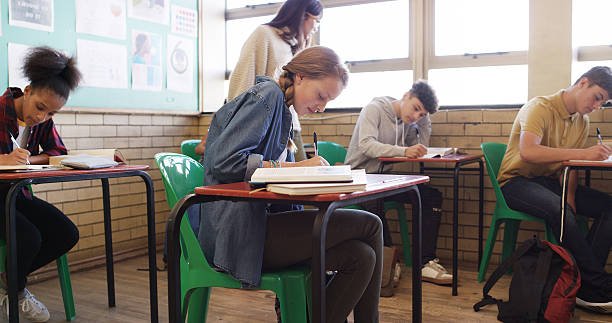
Many parents notice that their child spends long hours studying but struggles to remember what they have learned during exams. This is a common challenge, especially as academic expectations increase with age. The issue often lies not in effort, but in how students study. Developing strong memory skills is essential for academic success, confidence, and long-term learning.
This article explains practical, research-backed memory techniques that help students retain information more effectively. It is written to help parents understand how schools support memory development and how these strategies can be reinforced at home.
Why Memory Skills Are Critical for Academic Success
Memory plays a foundational role in learning. From understanding basic concepts in primary school to applying complex ideas in higher grades, students rely on their ability to store and retrieve information.
Strong memory skills help students:
- Understand concepts instead of memorising mechanically
- Recall information accurately during exams
- Build connections between topics
- Reduce exam stress and last-minute cramming
- Develop independent learning habits
Schools that actively teach memory techniques enable students to study smarter, not longer, making learning more effective and enjoyable.
Understanding How Students Remember Information
Before exploring specific strategies, it helps to understand how memory works in a learning context. Memory can broadly be divided into:
- Short-term memory, which holds information briefly
- Long-term memory, where knowledge is stored and retrieved over time
Effective memory techniques help move information from short-term to long-term memory through understanding, repetition, and application. When students actively engage with content rather than passively reading, retention improves significantly.
Proven Memory Techniques for Students
Active Learning Instead of Passive Reading
One of the most effective memory techniques is active learning. Simply reading textbooks repeatedly is far less effective than engaging with the material.
Active learning includes:
- Asking questions while studying
- Explaining concepts in one’s own words
- Teaching a topic to a peer or family member
- Writing short summaries after each study session
Schools that encourage discussion, presentations, and interactive lessons help students strengthen recall naturally.
Spaced Repetition for Long-Term Retention
Spaced repetition involves revisiting information at regular intervals instead of cramming everything at once. This method strengthens neural connections and improves long-term recall.
For example:
- Reviewing a lesson the same day it is taught
- Revisiting it after a few days
- Revising again before exams
Many structured academic environments, including leading schools in electronic city, integrate revision cycles into their curriculum to support consistent learning rather than last-minute memorisation.
Visual Memory Techniques
Visual aids significantly enhance memory, especially for younger learners and visual thinkers. Diagrams, charts, mind maps, and colour-coded notes make information easier to recall.
Common visual strategies include:
- Mind maps to connect ideas
- Flowcharts to understand processes
- Timelines for history and events
- Highlighting key points with colours
Schools that use smart boards, visual presentations, and project-based learning help students retain complex concepts more effectively.
Mnemonics and Memory Aids
Mnemonics are simple tools that help students remember complex information using patterns, acronyms, or associations.
Examples include:
- Acronyms for lists or sequences
- Rhymes or songs for formulas
- Linking concepts to familiar objects or stories
These memory techniques are especially useful in subjects such as science, mathematics, and languages, where structured recall is required.
Role of Understanding in Memory Retention
Memorisation without understanding leads to short-lived learning. When students grasp the “why” behind a concept, recall becomes easier and more accurate.
Effective teaching focuses on:
- Conceptual clarity
- Real-life applications
- Logical progression of ideas
- Encouraging questions and curiosity
Many academically strong institutions, including reputed schools in bannerghatta road, emphasise concept-based teaching to ensure students truly understand what they learn.
The Impact of Practice and Application
Practice reinforces memory. When students apply what they learn through problem-solving, experiments, writing tasks, or discussions, retention improves significantly.
Application-based learning includes:
- Solving varied types of questions
- Participating in lab work and projects
- Writing answers in their own words
- Taking regular assessments
This approach not only strengthens memory but also builds exam readiness and confidence.
Importance of Sleep, Nutrition, and Routine
Memory is closely linked to physical and mental wellbeing. Even the best memory techniques will not be effective if students are exhausted or stressed.
Key lifestyle factors that support memory include:
- Adequate sleep for memory consolidation
- Balanced nutrition to support brain function
- Regular study routines
- Breaks between study sessions
Schools that promote a balanced schedule, co-curricular activities, and wellbeing initiatives help students maintain healthy learning habits.
How Schools Support Memory Development
Modern schools recognise that academic success depends on how students learn, not just what they learn. Many institutions actively incorporate memory techniques into classroom practices.
This support may include:
- Structured revision plans
- Activity-based learning
- Continuous assessments with feedback
- Teaching study skills explicitly
- Encouraging reflection and self-assessment
Leading top international schools in bangalore often integrate global best practices that focus on learning strategies, cognitive skills, and independent thinking.
Memory Techniques in International Curricula
International curricula place strong emphasis on inquiry, reflection, and application, all of which enhance memory retention.
Students are encouraged to:
- Research topics independently
- Present and explain concepts
- Reflect on learning outcomes
- Connect subjects across disciplines
Such approaches, commonly seen in top ib schools in bangalore, naturally strengthen long-term memory and conceptual understanding.
How Parents Can Support Memory at Home
Parents play a vital role in reinforcing memory techniques outside the classroom. Simple habits at home can make a meaningful difference.
Parents can:
- Encourage children to explain what they learned at school
- Help them create study schedules with revision gaps
- Promote understanding over rote learning
- Provide a quiet, organised study environment
- Avoid excessive pressure and comparison
When home and school work together, students develop stronger learning habits and confidence.
Recognising That Every Child Learns Differently
Not all memory techniques work equally well for every student. Some children respond better to visuals, others to discussions or hands-on activities.
Schools that recognise different learning styles:
- Offer varied teaching methods
- Adapt instruction based on student needs
- Provide individual feedback and support
This flexibility ensures that each child develops memory strategies that suit their learning style and academic strengths.
Conclusion
Effective memory techniques help students retain information, understand concepts deeply, and perform confidently in assessments. When schools focus on active learning, conceptual clarity, regular revision, and student wellbeing, memory development becomes a natural part of the learning process. By supporting these practices at home and choosing schools that prioritise learning strategies, parents can help their children build strong academic foundations and long-term success using proven memory techniques.
Quick answers
Frequently Asked Questions