
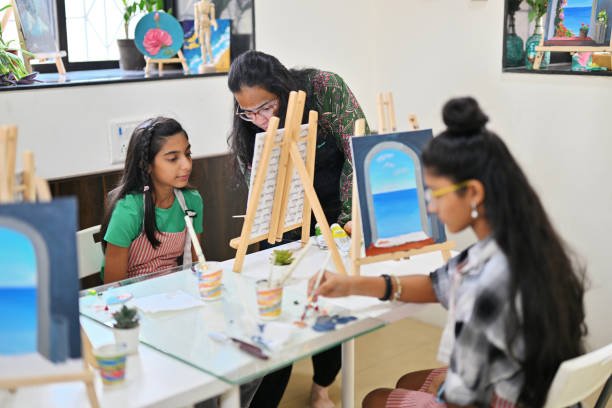
Arts and crafts for kids are more than just fun activities—they play a meaningful role in a child’s cognitive, emotional, and social development. Through cutting, colouring, folding, and designing, children learn to express themselves while improving essential skills such as concentration, coordination, and creativity.
For parents and educators, introducing creative projects at an early age helps children develop problem-solving abilities and confidence. This guide presents ten simple yet engaging craft ideas that encourage learning through creativity while keeping children productively engaged.
Why Arts and Crafts Matter in Childhood
Arts and crafts for kids support holistic development. When children participate in creative tasks, they:
- Strengthen fine motor skills
- Improve hand–eye coordination
- Develop patience and focus
- Build decision-making abilities
- Express emotions constructively
Many educators in ib schools in bangalore integrate creative activities into daily learning because hands-on projects help reinforce academic concepts in a practical way.
1. Paper Plate Masks
Children can create animal or character masks using paper plates, colours, and strings.
Skills developed:
Creativity, imagination, and storytelling
2. DIY Greeting Cards
Let children design greeting cards for birthdays or festivals using coloured paper, stickers, and drawings.
Skills developed:
Design thinking and emotional expression
Structured creative tasks like these are commonly encouraged in icse schools in bangalore to help students build presentation and artistic skills.
3. Clay Modelling
Using child-safe clay, kids can shape animals, fruits, or miniature objects.
Skills developed:
Sensory development and hand strength
4. Nature Collage
Collect leaves, flowers, and twigs to create natural collages on chart paper.
Skills developed:
Observation skills and environmental awareness
This activity also teaches children to appreciate nature and sustainability.
5. Origami Creations
Simple origami projects like boats, birds, and flowers are excellent for step-by-step learning.
Skills developed:
Following instructions and spatial awareness
6. Bottle Art
Reusing plastic bottles for painting or decoration teaches creativity along with environmental responsibility.
Skills developed:
Resourcefulness and eco-awareness
Hands-on sustainability projects are often part of experiential learning in international schools in bangalore, where children are encouraged to reuse materials creatively.
7. Finger Painting
Allow children to paint using their fingers instead of brushes.
Skills developed:
Sensory exploration and colour recognition
This is especially beneficial for preschool-aged children.
8. Puppet Making
Paper bags or socks can be turned into puppets with simple decorations.
Skills developed:
Communication and storytelling abilities
9. DIY Photo Frames
Kids can decorate cardboard frames using beads, paper cutouts, and colours.
Skills developed:
Attention to detail and design sense
10. Handmade Bookmarks
Creating bookmarks with drawings or motivational quotes encourages reading habits.
Skills developed:
Creativity and literacy connection
Creative enrichment programs, including crafts, are often valued in best international schools in bangalore as they support balanced development beyond textbooks.
How to Make Craft Time Productive
To maximise the benefits of arts and crafts for kids:
- Provide safe, age-appropriate materials
- Encourage independence rather than perfection
- Appreciate effort, not just results
- Allow children to explore their own ideas
- Set aside regular creative time each week
These practices ensure children see crafts as enjoyable learning experiences rather than tasks.
Balancing Crafts and Academics
Arts and crafts should complement academics, not replace them. Research in education shows that creative engagement improves memory and understanding in subjects like math and language.
When children participate in creative work, they often return to academic tasks with better focus and reduced stress.
Long-Term Benefits of Arts and Crafts
Regular creative activities can help children:
- Develop innovative thinking
- Improve emotional regulation
- Build resilience through trial and error
- Strengthen planning and organisational skills
- Gain confidence in self-expression
These benefits extend into teenage years and adulthood, supporting both academic and professional success.
Conclusion
Arts and crafts for kids are powerful tools for learning and development. They nurture creativity, build essential life skills, and provide a healthy outlet for self-expression. Simple activities like paper crafts, painting, and modelling can significantly influence a child’s growth when introduced consistently.
By encouraging creative exploration at home and in school, parents and educators help children develop confidence, curiosity, and a lifelong love for learning. Craft time is not just play—it is preparation for creative thinking and problem-solving in the future.
FAQs
- At what age should children start arts and crafts?
Children can begin simple craft activities as early as 2–3 years with supervision. - How often should kids do craft activities?
2–3 times a week is beneficial for consistent skill development. - Are crafts useful for academic growth?
Yes, crafts improve focus, memory, and problem-solving skills. - What materials are safe for kids?
Non-toxic colours, child-safe scissors, paper, glue, and clay are recommended. - Can crafts reduce screen time?
Yes, engaging craft activities naturally encourage children to spend less time on devices.