

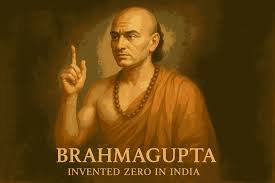
The question who invented zero is one of the most fascinating topics in the history of mathematics. Zero may seem simple today, but its discovery transformed how humans count, calculate, and understand numbers. Without zero, modern mathematics, science, finance, and technology would not function as they do now.
For students and parents, learning about zero is not just about history—it builds deeper appreciation for logical thinking and numerical concepts. This article explains the origin of zero, the scholars behind it, and why zero remains essential in modern learning.
Who Invented Zero? The Historical Answer
When discussing who invented zero, historians widely credit ancient Indian mathematicians. While several early civilisations used symbols to represent absence, the true mathematical concept of zero as a number originated in India.
The 7th-century scholar Brahmagupta is most often recognised for formally defining zero. He described how zero behaves in arithmetic operations, such as:
- Any number minus itself equals zero
- Any number multiplied by zero equals zero
- Adding zero to a number keeps its value unchanged
These rules formed the foundation of modern arithmetic.
An earlier mathematician, Aryabhata, also contributed to place-value systems that made the concept of zero possible. His work helped establish how numbers could represent large values efficiently.
Zero as a Placeholder vs. Zero as a Number
Understanding who invented zero requires knowing the difference between two roles zero plays.
Zero as a Placeholder
A placeholder zero shows position in numbers. For example, in 204, the zero indicates no tens. Some ancient cultures used placeholder symbols, but they were not treated as numbers for calculation.
Zero as a Number
The breakthrough in India was recognising zero as a number with value. This allowed mathematicians to perform operations involving zero and develop advanced mathematics.
This shift enabled:
- Algebra
- Negative numbers
- Accurate record keeping
- Complex equations
How Zero Spread Across the World
After its development in India, the idea of zero travelled through trade and scholarly exchange.
Arab mathematicians translated Indian texts and adopted the numeral system. Through their work, zero reached Europe. Although early European scholars were cautious about accepting zero, its usefulness in trade and calculation led to widespread adoption.
By the late medieval period, zero became a standard part of mathematical systems worldwide.
Why Zero Is Important in Mathematics
Zero plays several essential roles:
Foundation of Place Value
Modern numbering systems rely on zero. Without it, writing large numbers would be confusing and inconsistent.
Basis for Algebra
Equations often depend on zero as a reference point. Students frequently solve equations where results equal zero.
Supports Negative Numbers
Zero separates positive and negative values, enabling number lines and coordinate graphs.
Measurement and Science
Temperature, altitude, and financial balances often use zero as a baseline.
Students learning these concepts benefit from structured academic environments. Many families exploring strong mathematics programs evaluate options like ib schools in bangalore where conceptual learning is emphasised.
Zero in Modern Technology
Zero is central to modern digital systems.
Computers and Binary Code
Computers operate using binary language made of 0s and 1s. Every app, website, and digital tool depends on zero.
Engineering and Physics
Zero represents equilibrium points and neutral states in scientific models.
Finance and Accounting
Zero ensures accurate balance tracking and financial calculations.
A strong math foundation at institutions such as icse schools in bangalore helps students understand these applications clearly.
Educational Value of Learning About Zero
Understanding who invented zero helps students develop:
- Logical reasoning
- Numerical confidence
- Historical awareness
- Conceptual clarity in mathematics
Learning the story of zero also shows how ideas evolve over time and across cultures.
Many globally aligned curricula at international schools in bangalore incorporate historical context into mathematics lessons, helping students connect theory with real-world understanding.
Common Misconceptions About Zero
“Zero Means Nothing”
Zero represents a measurable value—the absence of quantity—not “nothing.”
“Zero Was Always Known”
Many early civilisations functioned without a true zero. Its development required abstract thinking.
“Zero Has No Real-Life Use”
Zero is used in computing, science, engineering, and daily life.
Zero and Critical Thinking
Zero encourages abstract reasoning. Students learn that numbers can represent concepts beyond physical objects.
For example:
- Understanding zero items
- Solving equations involving zero
- Interpreting graphs and coordinates
Academic environments such as best international schools in bangalore often promote this type of conceptual learning, helping students build strong analytical skills.
Cultural Significance of Zero
India’s contribution to mathematics through zero is globally recognised. The development of zero demonstrates how knowledge from one region can influence the entire world.
For students, this story highlights the value of curiosity, scholarship, and cross-cultural learning.
Conclusion
The story of who invented zero reveals one of humanity’s most important intellectual achievements. Scholars like Brahmagupta transformed zero into a number that could be used in calculations, paving the way for modern mathematics.
Today, zero supports everything from simple arithmetic to advanced computing. Its importance extends across science, technology, and daily life.
For students, learning about zero builds not only mathematical skills but also appreciation for how ideas shape progress. A strong educational foundation that values conceptual clarity can help learners fully understand such transformative discoveries.
Quick answers
Frequently Asked Questions